Opinion · Policy & Economy
Senator Remi Tinubu N50,000 and a Frying Pan: What Has Akara Got to Do With Africa's N50 Trillion Problem?
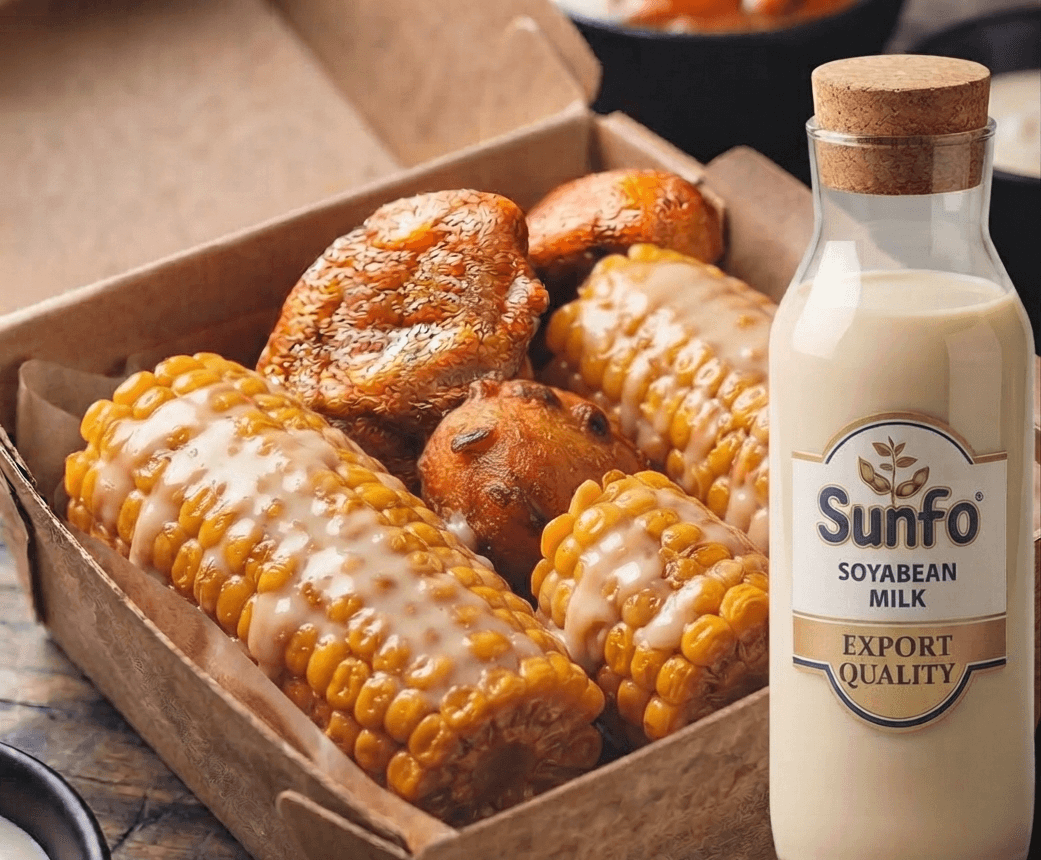
Government should encourage corporations, not petty trading. Meanwhile what happens to the kuli-kuli seller who has ambition beyond petty-beaning? Could our akara bean be same bean in Heinz's $25B empire?
What Senator Tinubu Said, and Why Both Sides Missed the Point
Nigeria's First Lady and Senator Remi Tinubu recently announced that she empowered petty traders with N50,000 each. She opined that starting an akara, corn, or kuli-kuli business isn't complicated. Akara — fried bean cakes sold at roadsides by early morning traders. Kuli-kuli — processed groundnut snacks, sold in handfills by solo vendors. Both are staple informal economy products identified with the "lower class" in Africa.
Corn sold boiled, or roasted mostly at gutter fronts. urrghhhh!
The internet erupted. Critics said: you are the wife of a former Lagos State Governor and sitting Nigerian President, and a former Senator, you should be talking about building industries, not frying bean cakes. Defenders said: these traders are valid, someone has to support them, stop being elitist. Fierce passion flying here and there. Ironically, some of us had our mouth full of akara jumping those polemic exchanges.
I dare say the akara seller is not the problem. The frying pan is not the ceiling. What those passionate viewpoints in that entire debate missed is the gap between the frying pan, and becoming a food brand and a sustainable enterprise.
Nobody is asking: what happens to the kuli-kuli seller who has ambition beyond the roadside?
The Primary Product Is Just the Beginning. The Raw Material Is the Nexus.
Let us talk about what these "petty" resources actually are.
Corn. Africa produces hundreds of millions of tonnes of maize annually. It is feedstock for breakfast cereals, corn flour, corn starch, biofuel, animal feed, and snack foods. Kellanova, the company that sells Corn Flakes, Pringles, and Cheez-It reported $12.7 billion in revenue in 2024. It started with corn. The same corn a woman in Kano grinds in the morning and fries for the school run market. The raw material is identical. The environment and system around it is not.
Groundnuts. Nigeria was once one of the world's largest groundnut exporters. The Groundnut Pyramids of Kano were a global symbol of African agricultural wealth in the 1960s. From that same resource, kuli-kuli is made. But also peanut butter, groundnut oil, protein bars, premium snack lines. The emphasis should quit underrating groundnut proceeds. If European biscuit brands can build a premium cookie empire from their local grains, there is no reason kuli-kuli made from an equally nutritious, culturally rooted, globally exportable product cannot be positioned as an African premium snack. The question is whether the person making it has access to branding guidance, packaging design, distribution strategy, the financing and will to act on them.
Beans. The same black-eyed beans ground and fried to make akara are the basis for bean flour, vegetable protein, and multiple processed food lines. Heinz, one of the world's most recognisable food corporations with $25 billion in combined Kraft Heinz revenue in 2024 built its global empire in significant part on baked beans. Henry Heinz started with a backyard garden and his mother's horseradish recipe. In 1869. By 1919, fifty years later, the company had more than 6,000 employees and 25 factories. The akara seller in Bukuru, Jos is Henry Heinz in 1869. The only difference is the environment and system around her.
The Same Raw Material, Two Different Worlds
| Raw Material | Street Version | With System & Scale |
|---|---|---|
| Corn / Maize | Roasted corn, corn snacks | Kellanova — $12.7B revenue (2024) |
| Groundnuts | Kuli-kuli, groundnut oil | Planters, premium snack brands, $billion export industries |
| Black-eyed Beans | Akara | Heinz / Kraft Heinz — $25B revenue (2024) |
The trader in Makurdi who packages kuli-kuli in polythene and sells it outside her 'yard' for N100 is not categorically different from the founder of a future Nigerian FMCG company.
The distance between them is not talent.
Neither ambition.
Maybe capital?
But certainly, the presence or absence of a structured support system that takes N50,000 and a frying pan and converts them into a brand, a business, and eventually a company that employs other people and pays them well. Perhaps N200,000 a month for a production manager, N500,000 for a brand lead, N2 million for a distribution head, and keeps growing from there.
I pause here. That you elitist condemning Sen. Mrs. Tinubu might have some laugh.
Because, how nah? From a kuli-kuli seller, and N50,000 meagre support to a company that employs hundreds and pays well? Delusion! But, let's continue ....
There's nothing you can tell me. What can N50k Nigerian Naira do?
You are right. Empowerment schemes is one of Africa's most expensive habits, and mindless performances. N50,000 given to a trader without a business health assessment, a growth roadmap, a marketing strategy, a record-keeping system, and a financing pathway that responds to her progress gets absorbed. Into stock. Into rent arrears. Into school fees. Into the daily cost of survival that never stops pressing. It is not wasted because the trader is irresponsible.
It is wasted because the capital arrived from people who don't care, and a system that was never designed at all
We are not criticising anyone here, we are only saying that if a philanthropist cares enough, they will find a way to track whether the business is actually growing, and maybe implement milestone financing that rewards execution rather than just existence. It is hard. But, what do you think E-Suite is sworn on? This is not 'talk is good motors'. This is what E-Suite founder has implemented before as a strategist consultant for SMS businesses, and Co-founder of the coop fintech 9MileOn.
Innocent Drinks, now a household name across Europe started with £500 worth of fruit and a market stall at a music festival in 1998. By the time Coca-Cola acquired an 18% stake in 2009, the company had grown from £400,000 to over £165 million in turnover. Three Cambridge graduates with fruit. The product was supercharged by the environment and system.
The Wrong Debate Framing
The critics asking "why is the First Lady encouraging roadside trading?" are, in effect, saying that certain businesses are beneath serious attention. That is a classist position dressed in economic language.
The defenders saying "these traders are valid, leave them alone" are equally questionable. Validity is not enough.
The question Senator Tinubu's critics should be asking is not whether akara is beneath national ambition. The question is: what is nations INTENTIONALLY — not performatively — building to take the akara seller who has entrepreneurial ambition from the roadside to the explorer side?
That is the N50 trillion question.
But Senator Ma, can you increase it small to maybe 200-and-something-thousand? Maybe then your critic would not shout too much? 😅
The follow-through layer. For every SMS business with ambition beyond the roadside.
Join E-SuiteSources & Attribution
Kellanova / WK Kellogg revenue: companieshistory.com (2026). Kraft Heinz revenue: Britannica. Heinz founding history: heinz.com. Innocent Drinks: BBC (2018). Africa FMCG outlook: beatroute.io. McKinsey Africa billion-dollar companies: Semafor (2023). Content was rephrased for compliance with licensing restrictions.
Source: E-Suite, "Senator Remi Tinubu N50,000 and a Frying Pan: What Has Akara Got to Do With Africa's N50 Trillion Problem?" (July 2026). https://esuiteai.com/insights/tinubu-akara-50-trillion